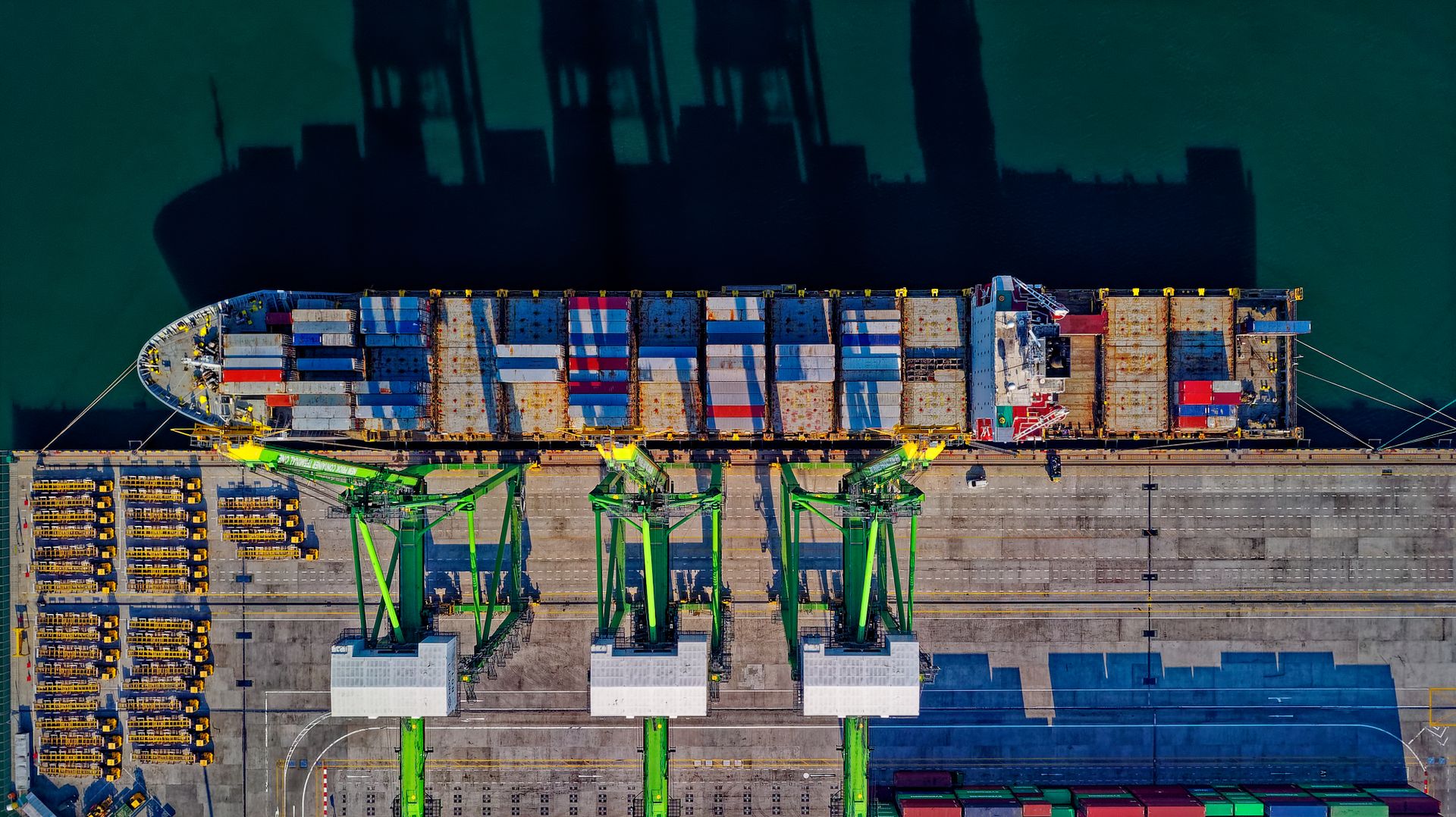
- Container unloading (also called devanning or unpacking) is the process of removing cargo from a shipping container and staging it for your warehouse.
- Most containers — 20ft or 40ft, palletised or loose-loaded — are unloaded in 1 to 2 hours on site.
- Fixed-rate pricing beats hourly labour hire for cost certainty — and clearing the box fast helps you dodge demurrage charges.
- Forklift work legally requires an LF licence, and imported containers can trigger biosecurity inspection.
If you import into Victoria, container unloading is the step that turns a sealed box on a truck into stock on your racks. Do it well and freight flows; do it slowly and you pay for it — in demurrage, in damaged product, and in warehouse hours. This guide explains how professional container unloading services work, what they should cost, and how to choose the right crew for your cargo.
What is container unloading?
Container unloading is the process of removing all cargo from a shipping container and preparing it for warehouse receipt — physically unpacking the goods, counting and checking them, palletising, wrapping, and staging freight for storage or onward transport.
It sounds simple, but a container is a tightly-packed, 2.4-metre-wide steel box with no room to manoeuvre. Whether cargo is stacked on pallets, slip-sheeted, or hand-stacked floor-to-ceiling changes everything about how it comes out. The Port of Melbourne — Australia’s busiest container port — handled a record 3.52 million TEU in 2025–26, with full overseas imports up around 4% to roughly 1.4 million TEU.[1] Every one of those import boxes has to be unloaded somewhere, by someone.
Container unloading vs devanning vs unpacking
These three terms describe the same job, and search engines (and AI assistants) treat them as close synonyms:
- Devanning — the formal freight-industry term for emptying a container. You will see it on 3PL and transport quotes.
- Container unpacking — the phrase most commonly searched in Australia; identical in meaning to unloading.
- Container unloading — the everyday, plain-English term for the same work, and the one most importers use.
At Apex we use them interchangeably. If a provider implies “devanning” is a premium service distinct from “unloading,” treat that as a pricing tactic, not a real difference.
How to unload a shipping container: 3 methods
There are three practical ways to empty a container. The right one depends on how the cargo is packed and what equipment and site access you have.
1. By hand (hand-balling)
For loose-loaded, floor-stacked cargo — cartons packed directly into the container with no pallets — the only way in is by hand. A crew forms a chain, moves cartons to the doors, and builds pallets outside. It is labour-intensive and the slowest method, but for many importers (especially of light cartons) it is how the container was packed at origin, so it is unavoidable.
2. With a forklift (tynes, slip-sheet or clamp)
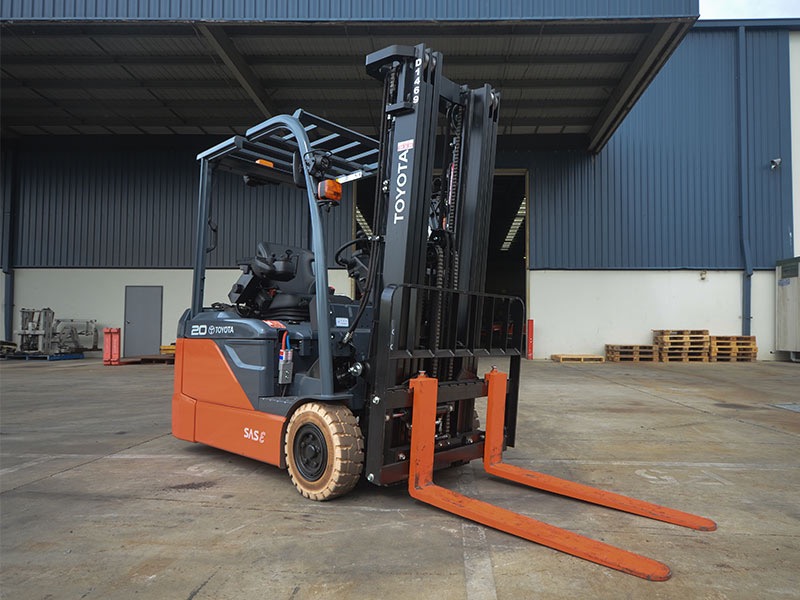
Palletised cargo comes out fastest with a forklift. The attachment matters:
- General tynes — standard forks for pallets that can be driven straight out of the container.
- Slip-sheet push-pull — grips a thin cardboard or plastic sheet under the load, for cargo shipped without pallets to save space.
- Clamp attachments — squeeze and lift unpalletised product (appliances, cartons, bagged goods) without pallets at all.
Matching the attachment to the freight is where experience pays off — our forklift-licensed operators carry all three.
3. Unloading without a loading dock
No dock? It is routine. Containers are unloaded at ground level: the load is broken down to the doors and either hand-balled out or lifted by a forklift working from the yard. A missing dock should never be a reason a provider turns the job down or adds a surcharge — it just changes the method.
How long does it take to unload a container?
With a qualified crew and the right forklift attachments, most container unloads are cleared in 1 to 2 hours on site — whether it is a 20ft or a 40ft, palletised or loose-loaded.
| Container | Typical time on site | What affects it |
|---|---|---|
| 20ft | 1–2 hours | Palletised loads at the faster end |
| 40ft | 1–2 hours | Loose-loaded freight toward two hours |
| 40ft High-Cube | 1–2 hours | Cargo volume and site access |
Times are indicative and vary with cargo type, packing and site access, but the takeaway is simple: a container is an hour or two of work, not a lost day — and clearing it fast directly protects you from the demurrage clock covered below.
How much does container unloading cost?
Container unloading is usually priced one of two ways, and the difference matters more than the headline number:
- Hourly labour hire — you pay per worker, per hour. If the container is tricky, the packing is poor, or the crew is slow, the bill climbs with no ceiling.
- Fixed rate per container — one agreed price for the job, set before anyone starts. A difficult unload is the provider’s problem, not a line item on your invoice.
For cost certainty, fixed-rate wins. It also aligns incentives: the faster the crew works, the sooner your box is cleared and the lower your demurrage risk. That is why Apex quotes a fixed rate on every Victorian job rather than running an hourly meter. We keep exact pricing private and quote per job — tell us the container size, cargo and location and you will have a number the same business day.
Get a fixed-rate unloading quote
Same-business-day pricing for any container, anywhere in Victoria. No hourly meter, no surprises.
Demurrage and detention: why speed matters
This is the hidden cost that catches importers out. Shipping lines give you a limited window of free time to return their container — and charge once you exceed it.[3]
- Demurrage accrues while a full import container sits at the port terminal past its free time.
- Detention accrues once you have taken the box away and hold it too long before returning it empty.
Australian carriers often combine the two into a single free-time allowance, and the charges escalate in tiers — day 8 costs more than day 4, and day 15 more again.[3] Free time varies by carrier; some schedules list around 10–12 calendar days for dry containers, but terminal storage can be billed separately on top.[4] The practical lesson is simple: the faster a container is unloaded and returned, the less you risk paying. A crew that clears your box in hours instead of days pays for itself.
Forklift licensing and biosecurity
Two compliance points separate a professional container unloading service from cheap, risky labour.
Forklift operators must be licensed
Operating a standard counterbalance forklift in Australia requires a High Risk Work (HRW) licence — class LF.[2] It is not optional, and it is not covered by a general “white card.” Using unlicensed operators exposes you to serious safety and liability risk if something goes wrong on your site. Every Apex operator holds a current LF licence and a minimum of two years’ hands-on experience.
Imported containers can trigger biosecurity checks
Australia’s Department of Agriculture, Fisheries and Forestry (DAFF) applies a risk-based approach to imported containers. Boxes from higher-risk origins can face a mandatory six-sided external inspection, and any container destined to be unpacked in a designated rural area may require a Rural Tailgate inspection.[5] Incomplete packing or cleanliness documentation can mean the container is opened and inspected at an approved premises — adding cost and delay. A crew that understands these conditions keeps your unpack compliant and on schedule.
Choosing a container unloading service near you
Searching “container unloading near me” is the right instinct — proximity means faster mobilisation and lower travel cost. But “near” should mean genuinely covering your area, not a metro-only crew adding a surcharge to reach you. When comparing providers in Victoria, check that they:
- Quote a fixed rate up front, not an open-ended hourly rate.
- Use licensed LF forklift operators with slip-sheet and clamp capability.
- Handle the whole job — unload, palletise, wrap, count and stage.
- Cover your location without hidden travel fees, metro or regional.
- Can mobilise fast — same-day quotes, crews on site in 24–48 hours.
Apex Container Services ticks all five across Victoria — from the Port of Melbourne and the western precincts to Geelong, Ballarat, Bendigo and regional sites. See our full container unloading services, review where we cover, or request a fixed-rate quote.
Container unloading FAQ
Container unloading is usually priced either by the hour (labour hire) or as a fixed rate per container. Fixed-rate pricing is agreed before the job starts, so a slow or awkward unload does not inflate the bill — and it helps you avoid demurrage by clearing the box quickly. Apex quotes a fixed rate for every Victorian job.
Most containers are unloaded in 1 to 2 hours on site, whether it is a 20ft or 40ft, palletised or loose-loaded. The exact time depends on how the cargo is packed and your site access, but Apex crews are set up to clear your box fast and keep you clear of demurrage charges.
Without a dock, containers are unloaded at ground level — either hand-balled out carton by carton, or lifted with a forklift once the load is broken down to the container doors. Experienced crews bring the right forklift attachment (tynes, slip-sheet or clamp) so a missing dock does not slow the job or risk the freight.
They describe the same job: removing cargo from a shipping container. “Devanning” is the formal logistics term, “unpacking” is common in Australia, and “unloading” is the everyday phrase. Apex uses them interchangeably — the service is identical.
Yes. Operating a standard counterbalance forklift in Australia requires a High Risk Work (HRW) licence — class LF. Every Apex operator holds a current LF licence and is experienced with slip-sheet and clamp attachments, so your freight is handled by qualified drivers, not untrained labour.
Apex covers all of Victoria — Melbourne metro and the Port of Melbourne, the western precincts (Laverton, Truganina, Altona), the south-east (Dandenong, Keysborough), plus Geelong, Ballarat, Bendigo and regional sites. We travel to you, with same-business-day quotes and typical mobilisation in 24–48 hours.
- Port of Melbourne reaches new TEU record — WorldCargo News, 2026. www.worldcargonews.com/news/2026/06/port-of-melbourne-reaches-new-teu-record
- Forklift high risk work licences (class LF) — SafeWork NSW. www.safework.nsw.gov.au/licences-and-registrations/licences/high-risk-work-licences/hrw-accordions/forklift-licences
- Demurrage vs Detention Explained: A Guide for Importers — Magellan Logistics. www.magellanlogistics.com.au/demurrage-vs-detention-explained-a-guide-for-importers
- Demurrage & Detention Free Time and Charges — Australia — OOCL. www.oocl.com/australia/eng/localinformation/ddfreetime/Pages/default.aspx
- Clearance of cargo containers (biosecurity) — Department of Agriculture, Fisheries and Forestry (DAFF). www.agriculture.gov.au/biosecurity-trade/import/arrival/clearance-inspection/cargo-containers